24/7 Reservations Los Angeles · Beverly Hills · Orange County · San Diego info@rgblacklimo.com
RG Black Limo LLC
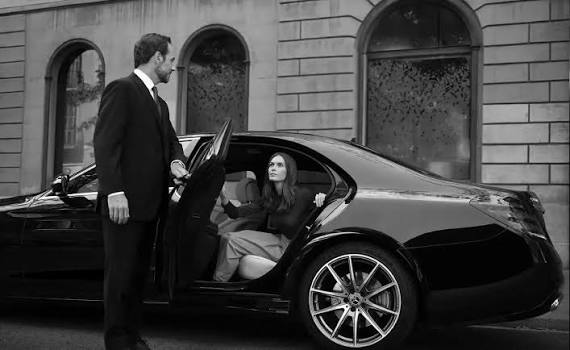
Black Mercedes-Benz S-Class sedan waiting outside a Los Angeles office at first light before the day's first pickup

Leadership

RG Singh

Founder, chief executive and president of RG Black Limo LLC.

Which cars are bought. Who is cleared to drive them. What a price is allowed to do, and who picks up the phone at four in the morning. In a company this size those are not committee decisions — they are one person's, and they are the reason the service reads the way it does.

Founder, CEO & president RG Black Limo LLC Los Angeles, California Corporate, event and private clients
RG Singh, founder, chief executive and president of RG Black Limo LLC, in a black suit and tie
RG Singh — founder, chief executive and president

01 — The role

The desk the decisions come back to.

RG Singh founded RG Black Limo LLC and holds its chief executive and president titles. In a company run this way that is less a hierarchy than a description of where work stops travelling: the cars, the chauffeurs, the prices and the phone all end up at the same desk.

That is also the whole argument for reserving direct. There is no franchise layer between the person quoting a job and the person accountable for it, and no affiliate network taking a cut of the difference. The company that answers the phone is the company that drives you.

If a car is late, that is mine to answer for — not a dispatcher's, and not an app's.RG Singh, founder and chief executive


The particulars

  • Role. Founder, chief executive and president of RG Black Limo LLC.
  • Company. An independent chauffeur operator running 99 vehicles across six classes, dispatched in-house.
  • Operating. More than a decade of chauffeured work in Los Angeles.
  • Based. Los Angeles, driving across Southern California and beyond it on request.
  • Holds. Fleet decisions, chauffeur vetting, pricing policy, dispatch and anything a client escalates.
  • Reachable. Through the reservations line and the office inbox — ask and it gets routed.

What the desk holds

The parts of the job a client never sees.

Most of his attention goes to the parts a client never sees — which vehicles come onto the road, which come off it, who is cleared to drive them, and what this business is allowed to put in writing.

02 — Where it stops

Six decisions that never get handed to anybody else.

A good deal of a chauffeur company can be systematised — routing, invoicing, reminders. These six decide whether a client comes back, so they stay where they are.

Which cars come on, and which come off

Ninety-nine vehicles is a large fleet to hold to one condition, which is exactly why the decision to add or retire a car sits with him rather than with a scheduler. A car that stops presenting properly leaves the road — it does not get quietly reassigned to the early airport runs where nobody is looking closely.

Who is cleared to drive

Chauffeurs are vetted, background-checked and experienced before a client ever meets one. Route knowledge and presentation matter; so does knowing when to say nothing at all, which is harder to teach than either.

What a price is allowed to do

Quotes come from a rate, not from how busy the night looks. There is no demand multiplier, because there is no algorithm sitting between you and the company — only a written figure that has to hold when the day arrives.

Who picks up the phone

Reservations are answered by the people who dispatch the cars, at any hour, rather than routed to an answering service that promises somebody will call you back. Being reachable is a staffing decision, and it is made deliberately.

What this company is allowed to claim

Nothing goes on this website that cannot be stood behind: no invented ratings, no borrowed or anonymous quotations, no partnership implied with an event we simply drive guests to. If a number is not real, it does not appear.

What happens when something goes wrong

A car that ran late, a request that was not passed along, a flight met at the wrong terminal — those come back to the office the same day and the remedy is agreed with the client rather than filed. A company with one owner has nowhere else to send it.

03 — The standard

Six things treated as non-negotiable.

Whatever the job is worth — a twenty-minute run to a restaurant or a fortnight of movements around a production — these do not flex.

01

Punctuality is the product

A chauffeur who arrives at the same minute as the client has already lost the one part of the job that cannot be recovered later. Cars are built into the schedule early, and the waiting allowance is printed on the quote rather than invented at the kerb.

02

The car presents, every time

Vehicles are cleaned before a reservation and maintained on schedule rather than when something starts to rattle. Interiors get checked between jobs, because the fourth ride of the day should look like the first.

03

Discretion by default

Conversation is offered, never imposed. Names, addresses and itineraries stay inside the company, and every chauffeur cleared to drive here has signed a confidentiality agreement — a client who needs their own paperwork executed on top of that can send it with the reservation.

04

One point of contact

The same office handles the quote, the confirmation, the change of plan at eleven at night and the invoice afterwards. Nobody gets passed between departments that do not exist.

05

The quote is the price

Written before anything is confirmed and honoured afterwards. Added hours or an extra stop are charged at the rate you were quoted, not at a premium for having asked on the day.

06

The job stays in-house

Reservations are driven by RG Black Limo rather than sold on to whoever happens to be nearest. If something genuinely cannot be covered, you are told plainly instead of being handed to a stranger.

04 — Hands on

Four kinds of day that get planned, not booked.

Most reservations are a car, a time and an address, and dispatch handles them without anyone needing a meeting. These four tend to land on the founder's desk instead, because the schedule matters more than the vehicle.

01

Corporate programmes and roadshows

Several vehicles, a schedule that moves during the day, and one contact for the whole run rather than a different driver's number for each leg. Itineraries are built in advance and adjusted as the day slips, not re-quoted every time a meeting overruns. Account billing where a finance team would rather have one invoice than eleven receipts.

Corporate travel

02

Weddings and family occasions

A timeline agreed weeks beforehand, the couple's car kept separate from the guest movements, and a plan for the awkward parts — the gap between ceremony and reception, the grandparents who should not be waiting outside, the end of the night when nobody wants to be organising anything.

Wedding transportation

03

Artists, talent and production

Routes driven in advance, unmarked vehicles, chauffeurs who have done this kind of work before, and a confidentiality agreement executed before service where a client asks for one. Call sheets change; the transport is expected to absorb that quietly rather than add to the day's phone calls.

VIP transportation

04

Long distance and private aviation

San Diego, the Coachella Valley, Santa Barbara, and the jet centres at Van Nuys where a car may be able to meet an aircraft rather than a terminal. Priced as a route with a figure agreed up front, so a three-hour drive is not a meter reading you watch nervously from the back seat.

Set-price routes

05 — What it means for you

Why any of this matters at 5am.

How a company is owned is not usually interesting. It becomes interesting at the moment something has to be decided quickly — a flight that lands two hours early, a second vehicle needed before dinner, a route that has to change because a road has closed and the ceremony starts at four.

At that point the useful question is not how large the company is. It is whether the person who answered can actually decide. Here they can, and if they cannot, the person who can is one call away rather than one department away.

  • No handover. The company that quoted you is the company that arrives, so the standard you were promised is the standard that turns up.
  • No demand pricing. A busy Friday night in Beverly Hills costs what a quiet Tuesday morning costs.
  • Answers rather than tickets. A change of plan gets agreed on the phone while it still matters, not logged for review.
  • Decisions in one place. An extra stop, a vehicle swap, a confidentiality agreement — settled by the office, not escalated through it.

06 — Escalation

Three moments that reach the office, not the driver.

Chauffeurs drive. They do not renegotiate prices, invent routes around a client's schedule or authorise a second vehicle from the kerb. When a reservation needs a decision rather than a manoeuvre, it comes back here.

A flight moves
Arrivals are watched, so an early landing or a two-hour delay is usually noticed before anybody calls about it. Where a pickup has to shift far enough to affect the chauffeur already assigned, the office reassigns rather than asking you to wait — and the agreed figure does not move because the aircraft did. See how that works on airport transfers.
The day changes shape
An extra stop, a dinner that runs long, a meeting that drops out of a roadshow, a second car needed for people who were not on the original list. Those are agreed by phone or message while the day is still happening, with any change to the price stated at the same time instead of appearing on an invoice later. Common on corporate programmes.
Something actually goes wrong
Mechanical trouble, traffic that no route avoids, a chauffeur taken ill. The obligation the founder holds is a replacement vehicle and a phone call telling you the truth about timing — not a scripted apology and a form to fill in. Where the failure is ours, it is not billed as though it were not.

There is no separate executive line and no account-manager tier. Corporate clients, wedding parties and one-off airport runs all reach the same office on the same number — the difference is what the conversation is about, not who is allowed to have it.

07 — Next step

One number, and somebody who can answer it.

Ask for a quote, ask a question about a vehicle, or ask something the website does not cover. It gets routed to whoever can actually settle it — often the person this page is about.

(323) 799-3190

Or read on: how the company works, the six vehicle classes, booking direct.