24/7 Reservations Los Angeles · Beverly Hills · Orange County · San Diego info@rgblacklimo.com
RG Black Limo LLC
Black Cadillac Escalade outside a downtown Los Angeles bank building during an investor roadshow

Service 12

Nine meetings, four neighbourhoods, one car.

The vehicle does not go away between stops. It waits where waiting is allowed, the chauffeur carries the running order for the whole day, and when the schedule bends there is a desk deciding what moves.

One vehicle, first pickup to last drop Hourly from $85 Re-sequenced from the desk

01 — What the day is

A sequence of appointments driven as one journey.

Roadshow work is the opposite of a transfer. Nobody is going from A to B; they are going from A to I, in order, and the transport either protects that order or wrecks it.

You book the day, not the distance. One vehicle and one chauffeur are held from the first pickup to the last drop, and the waiting between stops is part of what you are paying for rather than something charged as a surprise afterwards. Bags, coats and papers stay in the car all day, which removes the small friction of carrying everything into a lobby that has nowhere to put it.

Buffer sits inside every leg. Los Angeles traffic does not average out; it clusters. A quoted running order includes a margin on each leg, sized to the time of day rather than to a flat rule, and the margin is spent absorbing overruns rather than sitting in a car park congratulating itself. Nobody can guarantee a road, and we do not pretend otherwise — what we can do is not build a schedule that only works if every light is green.

The order is a document, not a memory. Before the day starts the chauffeur has every address, the door to use, where the vehicle will stand and what happens next. When the sequence changes mid-morning it changes on that document, and dispatch confirms it with the chauffeur rather than leaving two people to guess.

One company drives the whole day. We are a direct operator rather than a broker: the vehicle is ours, the chauffeur is dispatched by us, and no part of the day is quietly passed to a third party at four in the afternoon when the first car has run out of hours.

Financing and investor days

Back-to-back meetings booked by somebody who will not be in the car, and a running order that was fixed weeks ago and revised twice since. The person coordinating it usually wants one number to ring, not a driver's mobile.

Executives in from out of town

A visitor with two days in the city, a diary someone else filled and no interest in learning which side of Century City a building is on. The car becomes the fixed point in an unfamiliar day.

Property and site tours

Six addresses, some of them without a reception to wait in, and a group that needs to talk between stops. Short legs, long waits, and a chauffeur who knows which side of the street to be on.

A single meeting with a car held outside is hourly and as-directed work. A standing arrangement for a company rather than a one-off day is corporate travel. The full list is on services.

02 — One day, hour by hour

Nine stops, thirteen hours, and where each of them bends.

Read this as a sample sheet rather than a promise: the shape a roadshow day usually takes, and the point in it where something always gives.

06:50 — the vehicle is already outside

The chauffeur arrives ahead of the pickup time and tells dispatch he is there. You get the vehicle, the chauffeur's name and a number before the day starts, so nobody stands in a hotel doorway looking for a black car among four black cars.

07:30 — meeting one, Century City

Coats, cases and anything you do not want to carry into a lobby stay in the car. The chauffeur waits in the building's loading area where one exists and at the nearest legal kerb where it does not, which is established the day before rather than negotiated with a security guard at half past seven.

08:45 — meeting two, four blocks north

On a short leg the chauffeur will say plainly when walking is quicker than driving, and then meet you at the far end. Repositioning an empty vehicle around a block is his problem, not something you should be sitting in traffic for.

10:00 — meeting three overruns

Twenty-five minutes over, which is the ordinary way a roadshow comes apart. The chauffeur reports the slip as soon as it is obvious rather than at the moment you appear, so dispatch is already working on the rest of the day while you are still in the room.

10:40 — meeting four is across town

Downtown from Century City, at the wrong hour, with twenty-five minutes already gone. You are given the honest arrival time and two options: keep the order and arrive late, or take the fifth meeting first and come back. The choice is yours; the arithmetic is ours.

12:15 — the hour the car stops

Lunch is the one predictable gap. The chauffeur uses it to refuel and put the interior straight, and he stays close enough to be outside within a few minutes if the table breaks up early.

13:30 — meetings five and six, one building

Two appointments at the same address is the cheapest hour of the day and the easiest to underestimate. The vehicle holds its position throughout; nothing is released and re-sent, because releasing a car in Downtown and getting it back takes longer than waiting.

15:00 — the run west, which is the real risk

Eastbound at eight and westbound at three are the two legs that decide whether a roadshow finishes on time. This is where the buffer built into the morning gets spent, and it is the leg we quote most conservatively.

16:20 — meetings seven and eight, Beverly Hills

Short hops between offices a few streets apart, where the waiting matters more than the driving. By this point the chauffeur knows which entrance each building actually uses after four o'clock, because he has been standing outside them since the morning.

17:45 — meeting nine, Santa Monica

The last appointment, usually the loosest one, and the one most likely to turn into a drink that runs an hour past its slot. Extra time on hourly work is added at the rate you already agreed, and dispatch tells you before it is charged rather than afterwards.

19:40 — the last drop, or the terminal

Hotel, home or an evening flight out. If the day ends at an airport the chauffeur takes the bags to the kerb and waits until you are inside, and if it ends where it began the vehicle is booked again for tomorrow with the sequence already half written.

Every time above is an illustration of a shape, not a commitment about a road. We will not guarantee a journey time, a traffic condition or a flight, and any operator who does is selling you something they cannot control. What is committed is the vehicle, the chauffeur, the rate and the fact that somebody is watching the day.

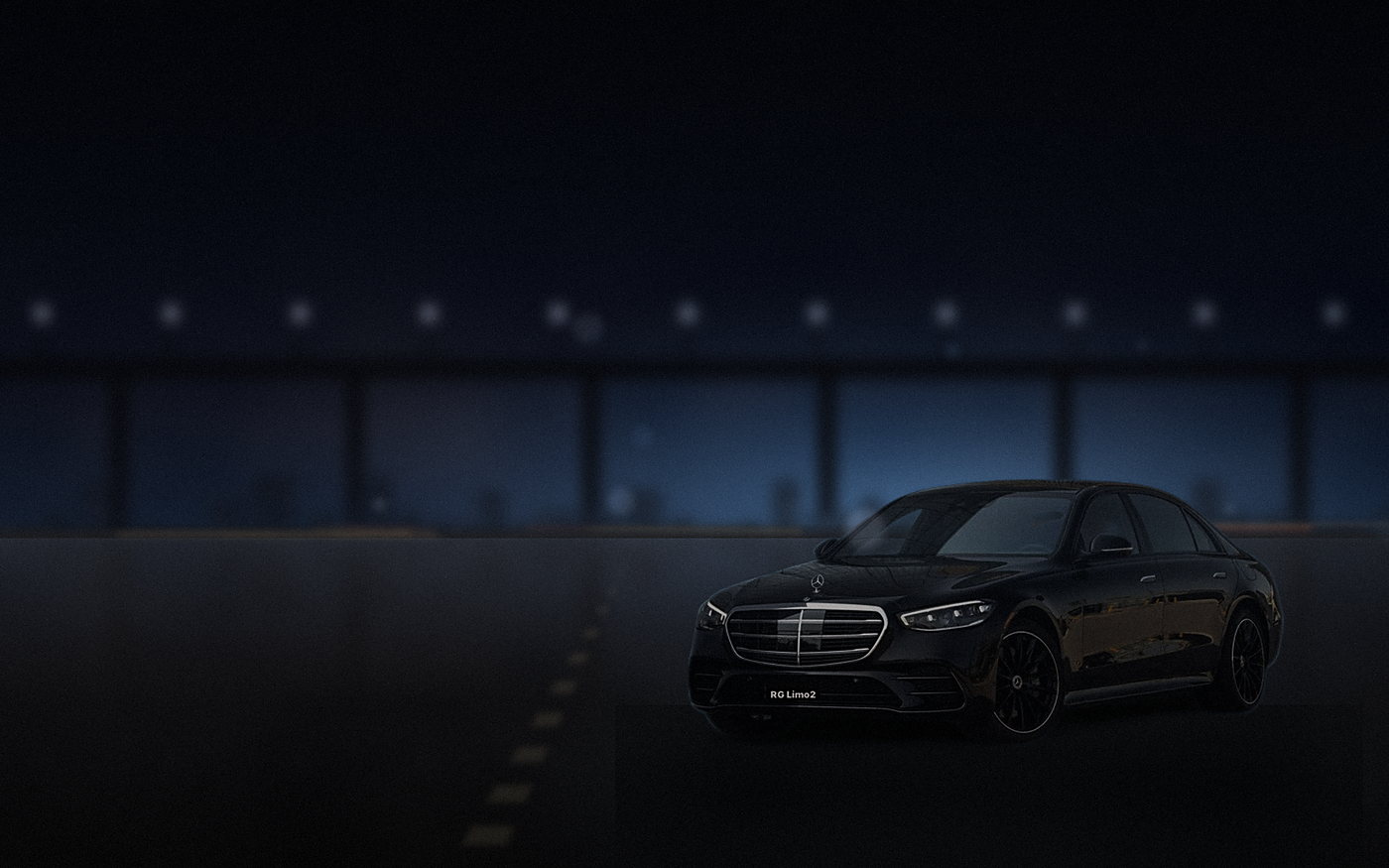
Black Mercedes-Benz S-Class sedan moving between Los Angeles meetings after dark
Nine meetings, one car, one driver

03 — When it slips

Seven ways a schedule breaks, and the answer to each one.

These are the calls dispatch takes on a roadshow day. None of them are unusual, which is exactly why there is an answer ready rather than a discussion.

One meeting overruns
The chauffeur reports the slip while it is happening. Dispatch works out what the rest of the day looks like with that time gone and puts the options to whoever is coordinating, in one message, with the honest travel figure attached.
Two stops collide
Where the sequence no longer fits, the order changes rather than the day being abandoned. Later stops are brought forward when the geography allows it, and you are told what that does to the finish time before anybody commits to it.
A stop is cancelled
The gap becomes a wait, and the vehicle holds position or moves somewhere more sensible to stand. On hourly work nothing changes about the rate; the hours were booked for the day, not for the individual appointments.
A stop is added
Give the address to dispatch rather than to the chauffeur, and it is written into the running order everyone is working from. If it pushes the day past the hours you booked, the extra time is at the rate already agreed and you hear that before it is added.
The passenger list changes
Two extra people at the third stop is a capacity question, not a preference. Vehicle capacities are fixed — three in the S-Class, six in an Escalade ESV or Yukon Denali, seven in a Suburban — so dispatch either moves you up a class or sends a second vehicle, quoted before it leaves.
The day ends early
Say so and the last drop happens early. Whether unused hours come off the invoice is set out on your confirmation rather than invented on the pavement, and it is one of the questions worth asking at the quoting stage.
The day ends much later
Extra hours are the same rate as the booked ones, added in the open. If the chauffeur is close to the end of what he can legally drive, dispatch tells you at the point it becomes relevant and sends a second chauffeur rather than pretending the problem does not exist.

Waiting allowances, cancellation terms and anything else with a number attached are stated on your confirmation. We would rather write "as stated on your confirmation" here than print a figure that turns out not to be yours.

Days built around one principal rather than a group sit better under executive car service. If you already know the shape of the day, send it to reservations and you will get the running order back with times against it.

04 — The chauffeur's brief

He is given the whole day before it starts.

A roadshow chauffeur is not driving to an address; he is running a sequence. What he holds before the first pickup is the difference between a day that absorbs a delay and one that collapses at eleven.

Each stop on the sheet carries more than a postcode. It carries the entrance to use, where the vehicle can legally stand, how long the walk from that spot to the door takes, and which of the day's appointments cannot be moved. Where a building has a service entrance that is quicker at five o'clock than at nine, that is on the sheet too, because somebody has driven it before.

Discretion is part of the brief rather than an extra. Chauffeurs sign non-disclosure agreements, and on a day where the conversation in the back is the entire point of the day, that is not a decorative detail. What is discussed between the second and third meeting does not travel any further than the car.

The rest is quiet competence and no commentary. The chauffeur does not fill a leg with conversation unless you begin one, does not take his own calls with passengers aboard, and does not need directing between stops. He holds the door, puts the cases in the boot, and is standing beside the vehicle when you come out of a lobby rather than parked four streets away.

  • The sequence in writing. Every stop, in order, with the fixed appointments marked and the flexible ones identified before the day begins.
  • A waiting position per stop. Established in advance, not improvised. Where there is nowhere legal to stand, that is known before you are inside the building rather than after.
  • A signed non-disclosure agreement. Standard for every chauffeur on the run, whatever the day happens to be about.
  • One line back to dispatch. Changes reach the desk and the desk reaches the chauffeur. Nobody is coordinating a day through a driver's personal mobile.
  • The same vehicle throughout. Held to the booking, cleaned before it arrives, and substituted only for a mechanical reason you are told about first.
  • Bottled water and somewhere to leave things. Coats, cases and boxes stay in the car between stops instead of following you into nine lobbies.

The company is TCP licensed and insured, founder-run and a direct operator rather than a broker. Who drives the cars, and why that arrangement matters on a day like this, is set out by RG Singh.

05 — The car, and what the day costs

Hourly from $85, counted from the first pickup.

A roadshow is priced as a block of time rather than as a list of journeys, which is both simpler to read and usually cheaper than nine separate fares.

Hours, not stops. The clock starts at the first pickup and stops at the last drop, and everything in between — the driving, the waiting, the repositioning — is inside that. Nine appointments do not produce nine charges. Any minimum that applies to your date and vehicle is stated on your confirmation.

What moves the figure. The class of vehicle, the number of hours, how much ground the day covers and how late it finishes. A sedan in Century City for six hours and a Suburban crossing the county for thirteen are different jobs; the quote says which one you are buying.

Airport legs can be set fares instead. Where a day begins or ends at an airport, the transfer may be cheaper on a fixed route than on the clock: from $125 for Beverly Hills, Santa Monica or Hollywood to LAX, from $150 for Malibu, Newport Beach and Irvine, from $525 for LAX to San Diego. Dispatch will quote it whichever way is lower.

Nothing arrives afterwards. Tolls and venue parking are passed through at cost and itemised. Gratuity is never added quietly. Every figure is confirmed in writing before the booking is accepted, and no meter runs in the car at any point in the day.

Roadshow days are quoted individually rather than from a rate card, because the variable is time rather than distance. Send the diary as it stands, however provisional, and you will get a figure and a running order back before anything is held.

06 — Before you book

Six questions, answered the way dispatch would answer them.

What is a roadshow day, in transport terms?

One vehicle and one chauffeur held for a single party across a long sequence of appointments, usually inside one city. The car does not go away between stops. It waits wherever waiting is legal, close enough that the distance from a lobby door to the rear door is measured in steps rather than blocks.

Do you hold the same car all day?

Yes. The same vehicle and the same chauffeur stay with the booking from the first pickup to the last drop. Nothing is handed over to a second driver halfway through and nothing is passed to another company, because we dispatch our own fleet.

What happens when a meeting overruns?

The running order is re-sequenced rather than abandoned. Dispatch and the chauffeur look at what is left, decide which stop moves and tell you the consequence in one sentence before anything changes. Where the next appointment cannot move, you are given the honest travel time instead of an optimistic one.

Does the chauffeur know the route between stops?

The chauffeur has the whole sequence before the day starts, with the addresses, the door to use and the waiting position for each one. Where a stop has an awkward entrance or nowhere legal to stand, that is established in advance rather than discovered while you are standing outside.

How is a multi-stop day priced?

As hourly work, from $85 an hour on the smallest class, running from the first pickup to the last drop and including the waiting in between. A day of nine stops is not nine separate fares. An airport leg on a set-price route can be quoted on its own where that works out cheaper, and either way the figure is confirmed in writing before the booking is accepted.

Can the day start at the airport?

It often does. LAX arrivals carry thirty minutes of complimentary waiting from the moment the aircraft lands rather than from the scheduled time, so a morning that begins at the terminal can run straight into the first meeting without a second booking.

Anything left over is worth a phone call rather than a form: the office answers at any hour, and the arrivals detail is set out in full on LAX transfers.

07 — Reserve

Send the diary as it stands. We will send back the day with times on it.

Provisional is fine. Addresses, the first appointment and the hour it has to end are enough to quote the vehicle, the hours and the sequence in writing.

(323) 799-3190

One desk, answered at any hour, holding the whole sequence for the day you book.