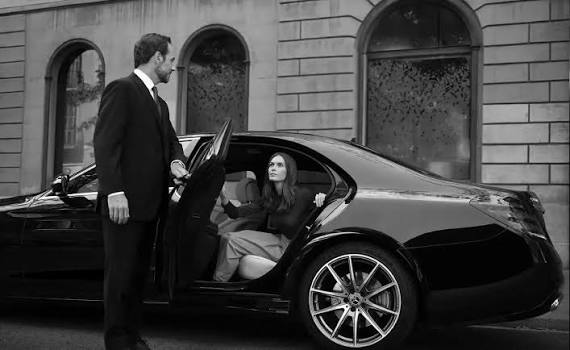
Anyone can buy a black sedan. What you are hiring is the person in the front seat: the route they read before leaving, the door they hold on the kerb side, and the judgement they use when your afternoon falls apart.
Hourly from $85Every chauffeur signs an NDA10+ years driving Los Angeles
Driver or chauffeur
Two people can drive the same car and sell you different things.
A driver moves a vehicle. A chauffeur runs the part of your day that happens between two front doors, and does it without asking you for instructions you should not have to give.
The word has been diluted. Any application will call the person collecting you a chauffeur, and on an easy day the difference is invisible: a car appears, you get in, you arrive. The difference shows on a hard day. The flight lands ninety minutes late. The kerb outside the restaurant is coned off. Your two o'clock moves to four while the car is already waiting.
Training is mostly rehearsal. A chauffeur learns the sequence of a pickup until it stops being a decision — where to stand relative to the rear door, which side to load from, how to close a door so it sounds like a latch rather than a slam. None of that is difficult. It is practised, and practice is the thing an application cannot dispatch.
Route knowledge is not the map. Every phone in Los Angeles has the map. What the phone does not carry is the knowledge that a particular Wilshire kerb is unusable at school run, that a studio gate wants your name on a list before the barrier lifts, or that ten minutes saved on the 405 can cost you fifteen at the other end.
Discretion is a working habit. Every chauffeur signs a non-disclosure agreement before a first job, and that is only the formal half. The rest is behaviour: no remark about where you have been, no photographs, nothing about one passenger repeated to another, and no attempt to fill a silence you never asked to have filled.
01
The run gets driven twice
Once in his head, once with you in it. Pickup point, gate, kerb side, the turn that is banned between four and seven, the second way in if the first is shut. By the time the car reaches you the thinking has already been done, which is why the drive itself feels uneventful.
Almost everything a passenger remembers happens in the ninety seconds before the car pulls away and the ninety seconds after it stops.
He arrives ahead of you and waits with the engine off. When you appear he is already standing, on the pavement side, hand on the rear door handle. If there is a case it goes in the boot before you are seated, not after. If it is raining he stands in it so that you do not.
At the other end the order reverses and the pace slows. The car stops where you can step onto a flat kerb rather than into a live lane. He walks round, opens, and stays at the door until you are clear of it. Nothing is handed to you at speed, and nothing of yours leaves in the boot — the load space is checked before the doors close.
Between those two moments the cabin belongs to you. Climate is set before you get in and adjusted on request, water sits in the door pocket, and the radio stays off unless you ask for it. That is the whole of the etiquette: be early, be quiet, be useful at the door.
The same standards apply across all fifteen services and every one of the six vehicle classes — a Sprinter door is held exactly as a sedan door is.
The same chauffeur for the whole booking
Standing instructions
The rules a chauffeur works to, written down.
These are not aspirations. They are the instructions handed to every chauffeur before a booking is released to him, and the reason two different chauffeurs give you the same drive.
Standards are set inside the company rather than bought in. We operate our own cars and brief our own people, so there is one version of how a job is run — written by the founder, RG Singh, and enforced by the desk that dispatches the work.
Dress
Dark suit, plain tie, shoes polished. No cap and no branded uniform — nobody you are meeting needs to know which company brought you.
Speech
A greeting, your name, confirmation of where you are going. Then nothing, until you speak or a decision genuinely needs your answer.
Confidentiality
A non-disclosure agreement is signed before a first booking. Addresses, names and anything said in the cabin stay in the cabin.
The telephone
His own handset stays away while you are aboard. Traffic updates to dispatch are hands-free and kept to a sentence.
Waiting
In position before your time, engine off, out of the car as you appear. An LAX arrival carries thirty minutes from actual landing; every other allowance is stated on your confirmation.
Changes en route
A new destination is treated as an instruction, not a negotiation. Anything that moves the price is confirmed with dispatch first.
Gratuity
Never added quietly to a total and never requested. If you choose to give one it goes to the chauffeur.
Substitution
If the vehicle has to change, you hear it from us before the car arrives, along with what is coming instead.
None of the above is a promise about the freeway. A chauffeur can leave early, read the run and hold the car for you; he cannot empty the 405. Arrival times are worked towards carefully and never guaranteed.
One booking, from his side
A six o'clock pickup starts the night before.
Here is the same reservation described from the front seat, so you can see where the punctuality comes from.
The night before
He collects the run from dispatch and reads it: pickup address, which side the door is on, gate or lobby name, the destination, the flight number if there is one. Anything unclear is queried then, at eight in the evening, rather than at six in the morning outside your house.
Ninety minutes out
Walk-round on the vehicle. Tyres, lights, glass, wipers. The boot is emptied so your luggage has the whole of it. Water is restocked in the door pockets, the cabin is wiped down and the bin is cleared. A car that looks used has failed before it has moved.
Forty minutes out
He leaves. Departure is padded for the hour rather than the distance, because a fourteen-minute journey at half past six is a thirty-five-minute journey at half past eight.
Twelve minutes out
Parked within sight of your door, engine off, and a message to the desk to say he is on station. You are not telephoned. If you look out of the window, the car is already there.
Your time
Out of the car as you appear, rear door on the pavement side, luggage in first. Climate already set, destination confirmed once, and then quiet.
The wait, when there is one
If a meeting overruns he stays put. Where the kerb will not allow it he holds at the nearest legal place and comes back on one message, so you never stand outside a building looking for a number plate. On an hourly booking that waiting is the booking.
After you have gone in
Load space checked, cabin checked, anything left behind logged with dispatch before the car moves again. The finish time goes on the record, which is what the invoice is built from.
Where a day has no fixed end, an hourly hold keeps the car and the same chauffeur on station between stops. Over weeks rather than hours, a private driver arrangement is the usual shape.
While you are inside
The car does not disappear the moment you do.
A chauffeur booking is bought in hours as often as in journeys, and most of an hourly booking is spent stationary. What happens in that stationary part is a fair test of the company.
He holds a position, not a lap of the block
Wherever the parking allows it, he stops within a minute of your door and stays there. Where it does not, he takes the nearest legal hold and tells the desk exactly where that is, so one message brings the car back to the entrance you actually came out of.
An overrun is our problem to absorb
Meetings run long. On an hourly booking the waiting is simply part of what you have reserved. On a single transfer, dispatch works out what the change means and confirms it with you before anything moves — you will not discover a revision on an invoice a week later.
The cabin is put back in order
Glass wiped, bin emptied, water replaced, cushions straightened, climate brought back to temperature a few minutes before you are due out. The second leg of a booking should feel identical to the first, which means somebody has to do that work while nobody is watching.
One line, in both directions
You can send a message to the desk or ring (323) 799-3190 at any hour, and either reaches somebody who can move the car rather than somebody who will pass a note. Dispatch also carries the chauffeur's number so you never have to.
Hours can be added to a booking on the day, subject to the car being free. Confirm the shape you want at the reservation form and the written quote will follow before anything is held.
What it costs
Hourly from $85, agreed in writing first.
A chauffeur service is priced on time and vehicle class rather than on distance, which is why two runs of the same length can sit at different numbers.
Hourly work starts from $85. Several airport runs are sold as set prices instead, because the shape of the journey never changes: Beverly Hills to LAX, Santa Monica to LAX and Hollywood to LAX each begin at $125. Both figures are starting points, and the figure that matters is the one written on your confirmation before the booking is accepted.
Nothing is metered. You are not watching a number climb while the car sits at a light, and the price does not move because it happens to be a Friday evening. If a change on the day alters the total, the desk tells you the new figure and waits for your answer.
The chauffeur's time. His hours are the substance of an hourly booking, including the stretches he spends parked outside a building waiting for you.
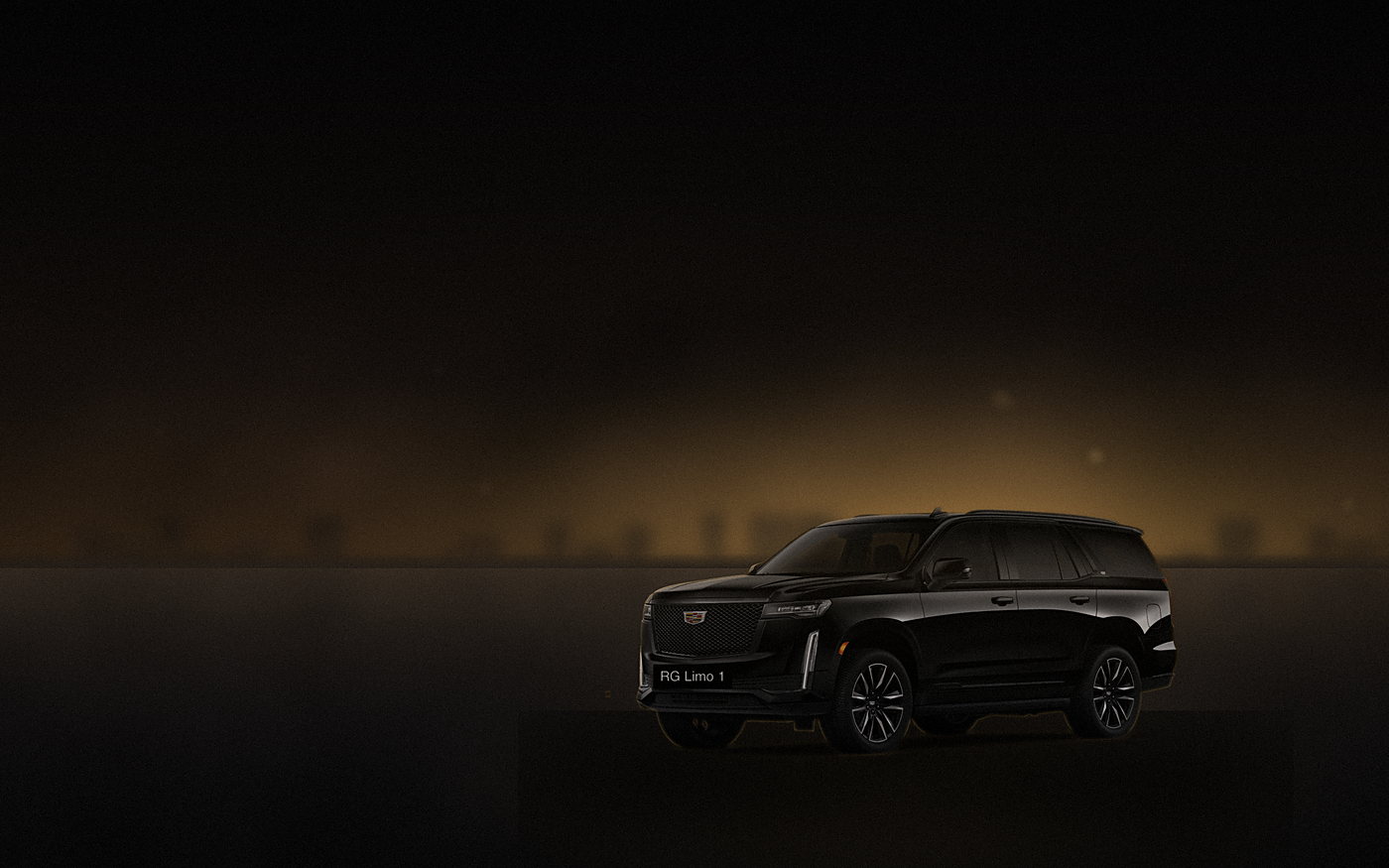
The class of vehicle. A sedan for three sits below an Escalade for six, which sits below a Sprinter for fourteen. Choose on luggage as well as heads.
How the hours fall. A single transfer, a four-hour hold and a full day are three different jobs for the same car, and they price differently.
Tolls and venue parking. Passed through at what they cost us, itemised on the invoice, never marked up.
No demand pricing. Six o'clock on a Friday is quoted the same way as ten o'clock on a Tuesday. Weather and traffic do not reopen the price.
Everything time-bound. Minimums, cancellation windows and waiting increments are stated on your confirmation. We would rather write them for your booking than publish a number we might vary.
First-time callers ask these
Questions we are asked about chauffeur service in Los Angeles.
A driver moves you from one address to another. A chauffeur is trained on everything around that: reading the run before setting off, placing the car on the correct side of the kerb, handling the door and the luggage, and staying quiet unless you open a conversation. He also signs a non-disclosure agreement before his first booking.
Only if you start it. You will get a greeting, your name and one confirmation of where you are going. After that the cabin is yours, the radio stays off unless you ask for it, and any traffic update he owes dispatch is taken hands-free and kept to a sentence.
Yes. Every chauffeur signs a non-disclosure agreement before a first booking, and nothing about a passenger, an address or a conversation is repeated afterwards. That signed agreement is the only undertaking of its kind we will put in writing, because it is the only one we can show you.
Ask, and we hold him to your bookings wherever the diary allows it. Regular passengers usually settle with one or two familiar chauffeurs. If the person or the vehicle has to change, you hear it from the desk before the car arrives, together with what is coming instead.
Hourly chauffeur work starts from $85. Set-price runs to LAX from Beverly Hills, Santa Monica and Hollywood start from $125. Both are starting figures rather than final ones, and the exact price is put in writing before your booking is accepted.
Tell the chauffeur, or ring dispatch on (323) 799-3190, which is answered at any hour. A new destination is treated as an instruction and not as a negotiation. Where the change moves the price, the desk works out the new figure and confirms it with you before anything is committed.
Still deciding on the shape of the booking? The services index sets the fifteen options side by side, and black car service covers the same cars sold as single point-to-point fares.
08 — Reserve
Give us the first address and the hour you need it.
A named chauffeur, briefed on your run, standing at the door before you reach it. Send the details through the form or say them once to the desk and let dispatch write them down.