The party stays together
One vehicle means one departure and one arrival. Nobody is waiting at the kerb for the second car, and the conversation that started at the hotel is still going when you get out.


Service 10
Seven to fourteen passengers, a luggage bay behind the last row, and a chauffeur who does the loading. One vehicle instead of three cars, which changes the day more than the arithmetic suggests. Hourly from $85; point-to-point quoted as a single fare.
01 — Definition
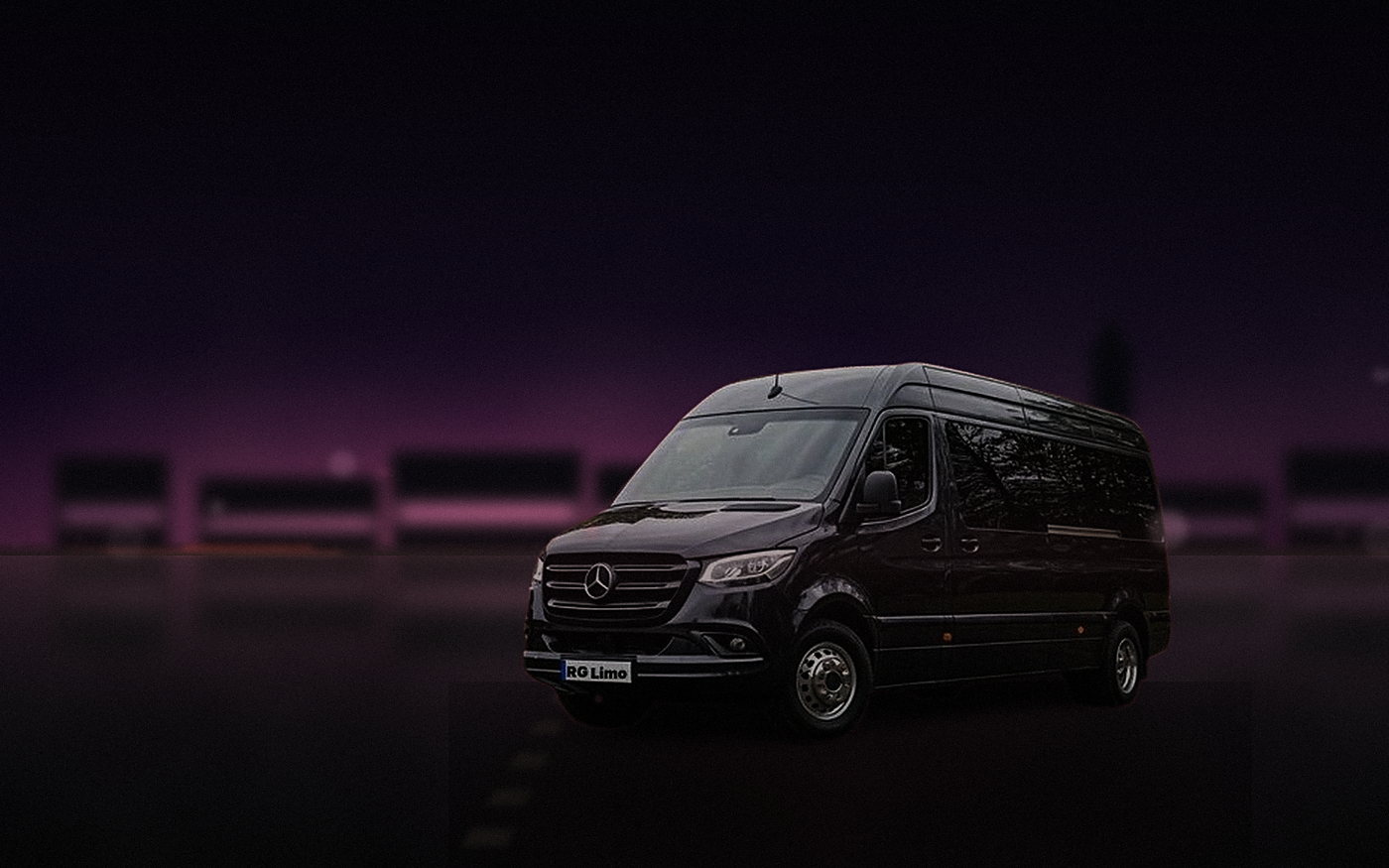
The word van does a lot of damage here. What arrives is a Mercedes-Benz Sprinter in the executive configuration: high roof so nobody stoops, individual seats rather than benches, climate control that reaches the back row, and a luggage bay behind the last seats so cases are not stacked in the aisle.
It exists for one problem. Above six passengers, or above four passengers with real luggage, an SUV stops working and the usual answer is two vehicles. Two vehicles means two fares, two drivers, two arrival times and a party that gets split at both ends. A Sprinter is one of everything.
The chauffeur is the same grade of chauffeur as in any other class — uniformed, TCP licensed, background checked, and doing the loading himself rather than watching you do it. That last part matters most on an airport run at six in the morning.
Where a party is larger than fourteen, we run several vans and SUVs to one schedule from one dispatch desk. See group transportation for how that is coordinated.
02 — Why it holds up
None of them are about the vehicle being larger.
One vehicle means one departure and one arrival. Nobody is waiting at the kerb for the second car, and the conversation that started at the hotel is still going when you get out.
The bay sits behind the last row, so cases are not on laps or in the aisle. On an airport run with a full party this is the difference between a comfortable hour and a bad one.
A van is quoted as a single vehicle. Two SUVs are two fares with two gratuities, and the second driver still has to be briefed on the same schedule.
No livery, no advertising, no operator name on the flank. The vans are serviced on the same short intervals as the sedans, because a group vehicle sitting in a hotel forecourt is seen by more people, not fewer.
03 — Who books it
04 — From enquiry to kerb
Head count, luggage, where from, where to, and whether the van waits. For a multi-stop day, the running order matters more than the addresses — send it in whatever form you have it.
You get the vehicle, the configuration and the figure in writing. If a set-price route covers the journey we quote that; if hourly works out cheaper for the day you have described, we say so rather than letting you overpay.
Seat count and luggage bay are checked against what you sent. If the combination is tight we tell you at this point and offer the alternative — usually a van plus an SUV.
Ahead of the pickup you receive his name, the vehicle and a direct number. On airport work he is already watching the flights, including a party split across two or three of them.
Cases go in the bay while people get in. On a hotel pickup he coordinates with the doorman so a fourteen-seat vehicle is not blocking a forecourt while the last person finds their bag.
The agreed figure, with any toll or venue parking shown on its own line. No per-passenger surcharge, no cleaning fee invented after the fact, no rounding up.
For parties above fourteen we run several vehicles to one schedule with one point of contact — see group transportation.
Eleven people, eleven cases and a projector from Santa Monica to a client site in Irvine. It all went in the one van, and we arrived in one piece rather than in three cars at three different times.
Two of the seats face each other, which meant we actually rehearsed on the way down.
05 — The vehicles
Most group enquiries end up in one of these three. Tell us the load and we will name the right one.
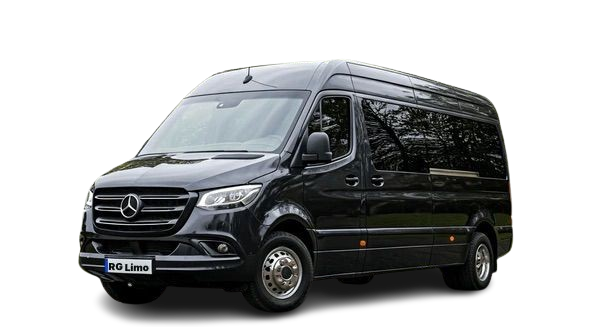
Seven to fourteen passengers, high roof, individual seats and a luggage bay behind the last row. The reason this page exists.
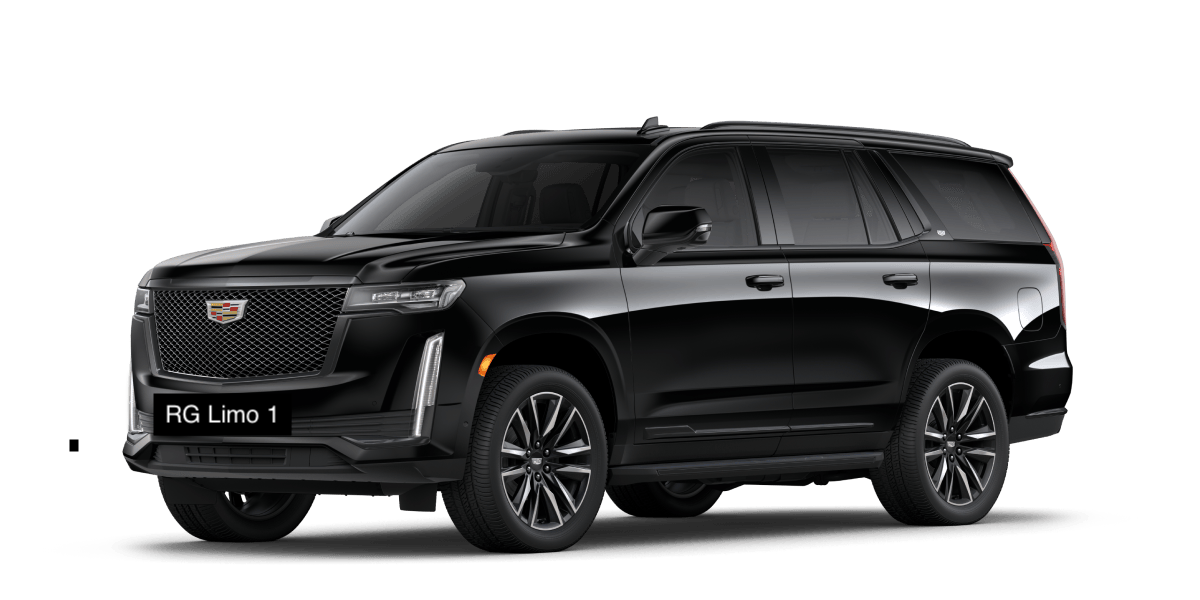
Up to six passengers with luggage. The right answer below seven people, and the vehicle we pair with a van when the party is larger than fourteen.
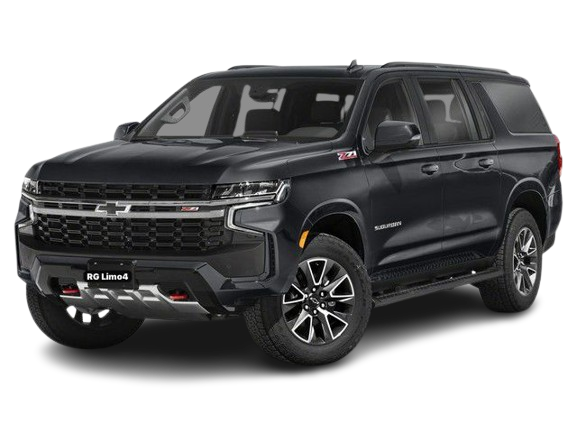
Six passengers and six large cases with the third row up. Booked alongside a van when a smaller group needs to travel separately.
Ninety-nine vehicles across six classes, so several vans on the same date is normal rather than exceptional. The full list is on the fleet page.
06 — Pricing, in the open
Group work is where hidden fees usually live. Here is ours, in full.
Booking direct, so the figure you are quoted is the figure the company charges — the reasoning is on why book direct.
07 — Questions
Between seven and fourteen, depending on the interior. Tell us the head count and the luggage and we will confirm the exact configuration for your date rather than leaving you to guess at booking.
Yes. Our Sprinters keep a rear luggage bay behind the last row, so a full party does not travel with cases on their laps. For fourteen passengers and fourteen large cases we will usually suggest a van plus an SUV — we would rather say that now than at the terminal.
Almost always, and it is simpler: one vehicle, one chauffeur, one arrival. Two SUVs mean two fares, two drivers and a group that gets separated at both ends of the journey.
That is the normal way to book it. Hourly and as-directed work starts at $85 per hour with the van staying with you — for an offsite or an evening out that works out cheaper than a string of separate transfers, and nobody waits on a kerb between them.
Regularly — Coachella and Stagecoach weekends, match days, weddings and production shoots. Book event weekends early; the vans go first.
Yes, in every size, fitted free of charge. Send the ages with the booking and they will be in place before the van reaches you.
08 — Reserve
Dispatch answers around the clock, and the person on the phone is the person arranging the van. Tell us how many people, how much luggage and the shape of the day.
(323) 799-3190Or request the van online · info@rgblacklimo.com · Quotes usually inside the hour