24/7 Reservations Los Angeles · Beverly Hills · Orange County · San Diego info@rgblacklimo.com
RG Black Limo LLC
Black Mercedes-Benz S-Class sedan outside a Los Angeles wedding venue in soft early light

Service 13

The one part of the day that runs to the minute.

Everything else can drift by ten minutes. The cars cannot. What follows is the part of the plan couples usually leave until last: the first look, the gap after the ceremony, the grandparents, and two waves of guests going home at midnight.

The couple's car, held all day Guest shuttles up to 14 seats Timeline agreed in advance

01 — The movements nobody costs

Eight journeys that are missing from most wedding plans.

Couples plan the arrival at the ceremony and the exit from the reception. Between and around those two there are usually six more movements, and they are the ones that go wrong.

A wedding is not one booking; it is a small timetable with several vehicles on it, most of them doing more than one job. The reason to write it down early is not neatness. It is that a car cannot be in two places, and the moment you list the movements in order you can see which ones overlap and therefore which ones need a second vehicle.

Read the list below against your own day. Anything that applies is a line on the quotation; anything that does not is simply left out, because there is no package here that charges you for movements you are not making.

  • The first look. An hour or two before the ceremony, often at a third location, and almost always forgotten until the photographer mentions it.
  • Hair and make-up running late. The pickup time is a moving target. Booked as hourly work, the car absorbs the drift instead of leaving without you.
  • The gap after the ceremony. Photographs, drinks, a change of clothes. The vehicles are doing nothing visible and still cannot be released, because they are needed at the far end of it.
  • Parents, on their own schedule. They arrive earlier than the guests and often leave before the dancing. That is a separate movement in both directions.
  • Grandparents, door to door. Short walks, a high step and a long wait are the three things to design out. An SUV with a low sill and a chauffeur who takes an arm solves most of it.
  • The bridal party in two halves. They are rarely all in the same building at the same hour, which turns one journey into two.
  • Guests leaving in waves. Not everyone goes at midnight. Two runs, an hour apart, both agreed beforehand so the second group knows it has not been abandoned.
  • The guest who should not drive. Nobody plans this one and every wedding needs it. A vehicle already on site makes it a two-minute conversation rather than a problem.

Weddings sit alongside the other occasions we drive on events and occasions. If the guest movements are the largest part of your day, read group transportation as well — the two are quoted together.

02 — The running order

How the day is built, from weeks out to the last car home.

Deliberately without clock times, because yours will be different. What matters is the order of the movements and which of them overlap.

Weeks out — the timeline is written down

You send what you know, however incomplete: the venues, the ceremony time and roughly who needs moving. It comes back as a list of movements with vehicles against them and a figure for each. Nothing is held until you have read it.

The week before — it is confirmed against the venue

Venues have their own timings, and they are frequently not the ones in your plan: when vehicles may enter, where they may stand, how long they may stay. That is checked before the day rather than argued about at a gate, and the sheet is amended where the venue requires it.

Morning — the first movement is rarely the couple

More often it is a dress, a case of flowers or two relatives from a hotel. Small journeys, easy to leave off a plan, and inconvenient to arrange at eight in the morning if nobody has thought about them.

Before the ceremony — the first look

Where a first look is happening, it is a separate journey to a separate place, and it is the movement most likely to run late. The car stays with you through it rather than being released and re-sent.

Arrival — the shortest journey with the largest audience

Sometimes only a few minutes of driving, and the only part of the transport anybody photographs. The chauffeur opens the door, stands back and stays out of the frame. Nobody wants a stranger in the pictures.

The gap — photographs, and cars that wait

Between the ceremony and the reception the vehicles look idle and are not. They hold position, because whatever is saved by sending them away is lost twice over getting them back through the same traffic an hour later.

Reception — guests arriving, family leaving

These two happen at once and pull in opposite directions, which is where a second vehicle usually earns its cost. Guests come in by shuttle while a car takes parents or grandparents home early, and neither group waits for the other.

The exit — once, and properly

The couple's car is the one vehicle held from the start of the day to the end of it, so it is outside and clean when you leave rather than being summoned. Where you go afterwards is your business; the chauffeur has the address and does not need it repeated.

Midnight onwards — guests home in waves

A fourteen-seat Sprinter takes the first group, returns and takes the second. Both departure times are on the sheet, so nobody is standing outside a venue at one in the morning wondering whether a van is coming back.

One desk holds all of it on the day, on (323) 799-3190, answered at any hour. Give that number to whoever is coordinating rather than to every guest, and give us the name of the one person whose instructions we should act on.

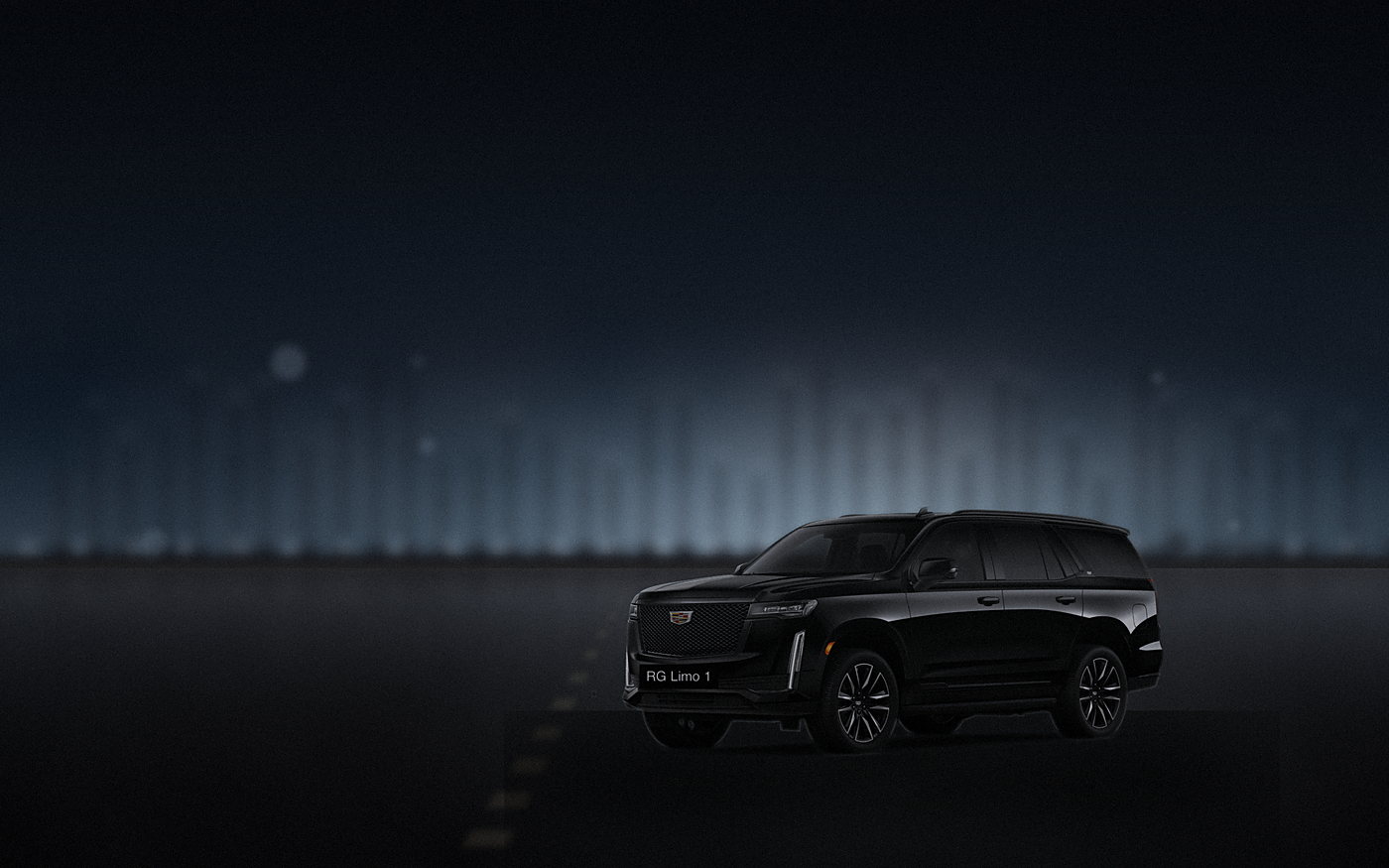
Black Cadillac Escalade waiting by the water at a Southern California wedding venue
Ceremony, photographs, and the last car home

03 — Who travels in what

Six classes, and a sensible answer for each group.

Capacity is not a preference. Once you know how many people move together, the vehicle chooses itself and the only remaining question is how many of them you need.

Start with the largest group. Guests are usually the biggest number and the easiest to solve, because fourteen seats at a time clears most guest lists in two runs. Everything else on the day is small vehicles doing precise jobs around that.

Then find the overlaps. Two movements at the same hour need two vehicles, however short the journeys are. This is the single most common reason a wedding quotation comes back higher than a couple expected, and it is also the reason it is worth writing the timeline down before you ask anyone for a figure.

Availability is confirmed, never assumed. Ninety-nine vehicles across six classes is what makes a Saturday in June answerable at all, but the specific mix for your date is checked and written into the quotation rather than promised on the phone.

  • The couple — Mercedes-Benz S-Class, three seats. Two of you and whoever is holding the flowers. Held from the first movement to the last so it is never somewhere else when you need it.
  • Parents — Escalade ESV or Yukon Denali, six seats. Both take six adults comfortably, which covers two sets of parents in one vehicle if the geography allows it.
  • Grandparents — an SUV, door to door. The aim is the shortest possible walk and no standing. The chauffeur takes an arm if it is wanted and puts the vehicle as close to the entrance as the venue permits.
  • The bridal party — Chevrolet Suburban, seven seats. Enough room that nobody is holding a garment bag on their knees between two locations.
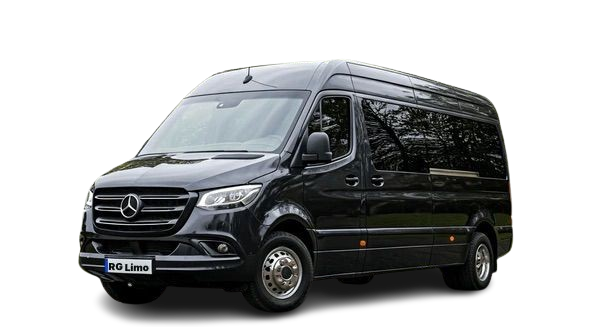
  • Guests — Mercedes-Benz Sprinter, fourteen seats. The shuttle vehicle, running whichever legs you need: hotel to ceremony, ceremony to reception, and home again in waves.
  • Anyone flying in — met at the terminal. LAX arrivals carry thirty minutes of complimentary waiting from the moment the aircraft lands, not from the scheduled time, so a delayed relative is not a delayed booking.

Every capacity above is the seated figure, and none of them stretch. The full six classes are on the fleet page, and arrivals are set out on LAX transfers.

04 — The vehicles on the day

One van solves the guest list. Two cars solve everything else.

Guest shuttle Black Mercedes-Benz Sprinter van used for RG Black Limo wedding guest shuttles in Los Angeles

Mercedes-Benz Sprinter

Fourteen seats, a floor you can walk down without stooping and a step that guests in formal shoes manage without help. The vehicle that turns a guest list into two journeys instead of nine.

14 passengers
Runs the same leg twice where needed
Sprinter van service

The car that stays yours

One vehicle is held for the couple across the whole day rather than being booked movement by movement. It is the same car and the same chauffeur from the morning to the exit, which is why it is outside and waiting at the end of the night instead of being called for.

Kept clean between legs, stocked with bottled water, and driven by somebody who has the day's sheet rather than a single address.

Family, in the right order

Parents and grandparents travel separately from the guests almost every time, because they arrive earlier and leave sooner. An Escalade ESV or a Yukon Denali takes six of them, and a Suburban takes seven where the bridal party travels together.

Which of those goes on your quotation depends on the overlaps in the timeline, not on the size of the wedding.

We do not dress the cars. No ribbons, no signage, no decoration of any kind is supplied by us, and if your florist wants to fix something to a vehicle it is worth asking us first. Vehicles are plain black and clean, which is the only aesthetic we will promise. All six classes: the fleet.

They walked the driveway at the venue a week before the wedding because the turning circle looked tight on the map. It was tight. They brought the sedan instead of the SUV and nobody on the day knew there had ever been a question.

Hannah P.Pasadena ceremony

05 — Cost, and four things we will not pretend

Hourly from $85, with every vehicle on its own line.

A wedding is quoted the way any long day is quoted: by the hours each vehicle is committed for. There is no wedding rate and no wedding surcharge.

The quotation lists each vehicle, the hours it is held and what those hours cost, then totals it. You can see immediately which movement is expensive and decide to drop it, combine it or move it half an hour, which is impossible with a package. Tolls and venue parking are passed through at cost. Gratuity is never added quietly. Where a leg runs to or from an airport, a set-price route may be cheaper than the clock and dispatch will quote it that way instead.

What follows is not modesty. It is the difference between what we can evidence and what we would be making up, and on a day that only happens once you are entitled to know which is which.

There is no wedding package

No tiers, no named bundles, nothing with a ribbon drawn on it. You are buying vehicles and hours. If a movement is not on your timeline it is not on your invoice, and if you add one later dispatch requotes it before it happens.

We publish no wedding minimum

Some dates and some vehicles carry one. Rather than print a figure that might not be yours, the minimum that applies to your date and your vehicle is stated on your confirmation, in writing, before you accept it.

We do not decorate anything

No ribbons, no floral fixings, no signage, no carpet at the kerb. The vehicles arrive plain, black and clean. Anything beyond that is your florist's territory, and we would rather tell you now than on the morning.

We invent no deposit or cancellation rule

Deposits, changes, cancellation windows and waiting allowances all sit on your confirmation. Anyone quoting you those numbers off a web page before they know your date is guessing, and you should treat the guess accordingly.

06 — Questions

What couples ask before they book.

Six answers that come up on almost every call, given as plainly as dispatch would give them on the phone.

Earlier than most couples expect, because Saturdays in spring and autumn go first. A date can be held before the running order exists; vehicles are the part that runs out, not planning time. The timeline itself is usually settled a few weeks out, once the venue has confirmed its own timings.

No. There is no package, no fixed number of hours attached to a wedding and no wedding surcharge. A wedding is quoted as hourly work, from $85 an hour, with each vehicle listed on its own line. Any minimum that applies to your date and vehicle is stated on your confirmation.

Not by us. We do not dress vehicles, fit ribbons or supply signage, and we would rather say so plainly than have you expecting it. If a florist wants to attach something to a car, ask us first and we will tell you whether it can be done without marking the paint.

Often, yes, provided the movements are sequential rather than simultaneous. Where the couple, the parents and the guests all have to move at the same moment, one vehicle cannot be in three places, and dispatch will say so while you are quoting rather than on the morning.

In waves, usually two. A fourteen-seat Sprinter clears one group and returns for the rest, and both departure times are agreed in advance so the second wave knows it has not been forgotten. Hours beyond the ones booked are handled as stated on your confirmation.

It usually does, by a little. The chauffeurs wait, and nothing later in the day is released because a photograph took twenty minutes longer than planned. Dispatch adjusts the remaining movements and tells whoever is coordinating what the change means for the rest of the evening.

Anything not answered here goes to dispatch on (323) 799-3190, or by email through contact. The wider list of chauffeur work sits under services, and the vehicles themselves are on the fleet page.

07 — Reserve

Send us the timeline. We will tell you what it needs.

A venue name, a ceremony time and a rough head count are enough to start. Dispatch reads the day back to you as a list of movements, prices each vehicle against it and puts the whole thing in writing before anyone commits.

(323) 799-3190

Dispatch is answered at every hour, which matters when the planning happens after work.