24/7 Reservations Los Angeles · Beverly Hills · Orange County · San Diego info@rgblacklimo.com
RG Black Limo LLC
Black Mercedes-Benz S-Class sedan below a Los Angeles office tower in cold early-morning light

Service 03

A moving office that arrives early.

Nothing about the cars changes when a company does the booking. What changes is everything around them: one named contact, one arrangement covering everybody who travels, and a desk that already has Tuesday's itinerary before Tuesday.

One named account contact Several travellers, one arrangement Direct operator, not a broker

What you are actually buying

The car is the same. The account is the difference.

Executive car service is not a different vehicle. It is the same sedan, dispatched under an arrangement that survives beyond a single journey.

Start with what does not change. An S-Class collecting a chief executive from Century City is the identical car, upkeep and chauffeur standard as one collecting a couple for dinner. We do not keep a better grade of vehicle in reserve for corporate work, because there is no worse grade to hold back.

The difference is administrative. A company rarely wants to buy one journey. It wants somewhere to send four travellers, a way to book without re-explaining the requirements each time, and a record it can reconcile at the end of the month. That is what an account is: your details held once, then applied.

Who tends to hold it. Usually an executive assistant, a chief of staff or whoever in the office has inherited travel. If that is you, the useful thing to know is that one telephone number reaches the desk that both quotes and dispatches, so a change of plan does not become a chain of forwarded emails.

  • A named contact. One person at the desk who knows the company, the travellers and the usual requirements.
  • Several travellers, one file. Each with their own notes: preferred class of car, kerb they use, whether they want conversation.
  • Two ways to book. The assistant books on the traveller's behalf, or the traveller books directly. Both arrive at the same desk.
  • Standing instructions. Set the default once — the office address, the usual vehicle, who to telephone if a flight moves.
  • Gathered billing. Journeys can be collected onto one invoice rather than settled car by car. The cycle and the payment terms are set out when the account is opened.
  • Written quotes. Every job is priced in writing before it is accepted, including the ones added at short notice.
  • Costs shown at cost. Tolls and venue parking are itemised at what they cost us. Gratuity is never added quietly to a total.
  • One company throughout. We own the cars and dispatch our own chauffeurs, so nothing is handed to a third party after you book.

If the requirement is broader than travel for a handful of executives — teams, visiting clients, event shuttles — corporate travel is the page written for that, and the reservation form will take a first booking either way.

Discretion

Some journeys are the news before the deal is.

Two directors travelling to the same unannounced address is information. Ground transport is one of the places it leaks, so we treat the itinerary as part of the confidential material rather than as logistics.

Signed, before a first booking

Every chauffeur signs a non-disclosure agreement before he is given work. It covers names, addresses, who travelled with whom and anything said in the cabin. We make no wider claim than that, because a signed agreement is the part we can actually show a client.

Nothing on the car says anything

No livery, no roof sign, no company name across the tailgate. A dark sedan waiting outside a building in Century City tells the street precisely nothing, which is the point. Where a lobby needs a name for the log, we give the passenger's, never the destination.

The itinerary stays at the desk

A run sheet goes to the chauffeur driving it and to the dispatcher holding it. It is not circulated further, not posted anywhere, and not used as material. No photographs of vehicles with passengers in them, and no client named on this website or on any other.

This matters more often than people expect. A diligence meeting held out of the office, an early flight nobody in the team knows about, a visiting board member who would rather not queue for a taxi at Tom Bradley — all of them are ordinary bookings that happen to be sensitive, and all of them are handled the same way.

Where an executive travels frequently we will hold one or two chauffeurs to those bookings as far as the diary permits, which removes the small friction of explaining an arrangement over again. The company is independent and founder-run, so the standard is set by one person — RG Singh — rather than by a franchise handbook.

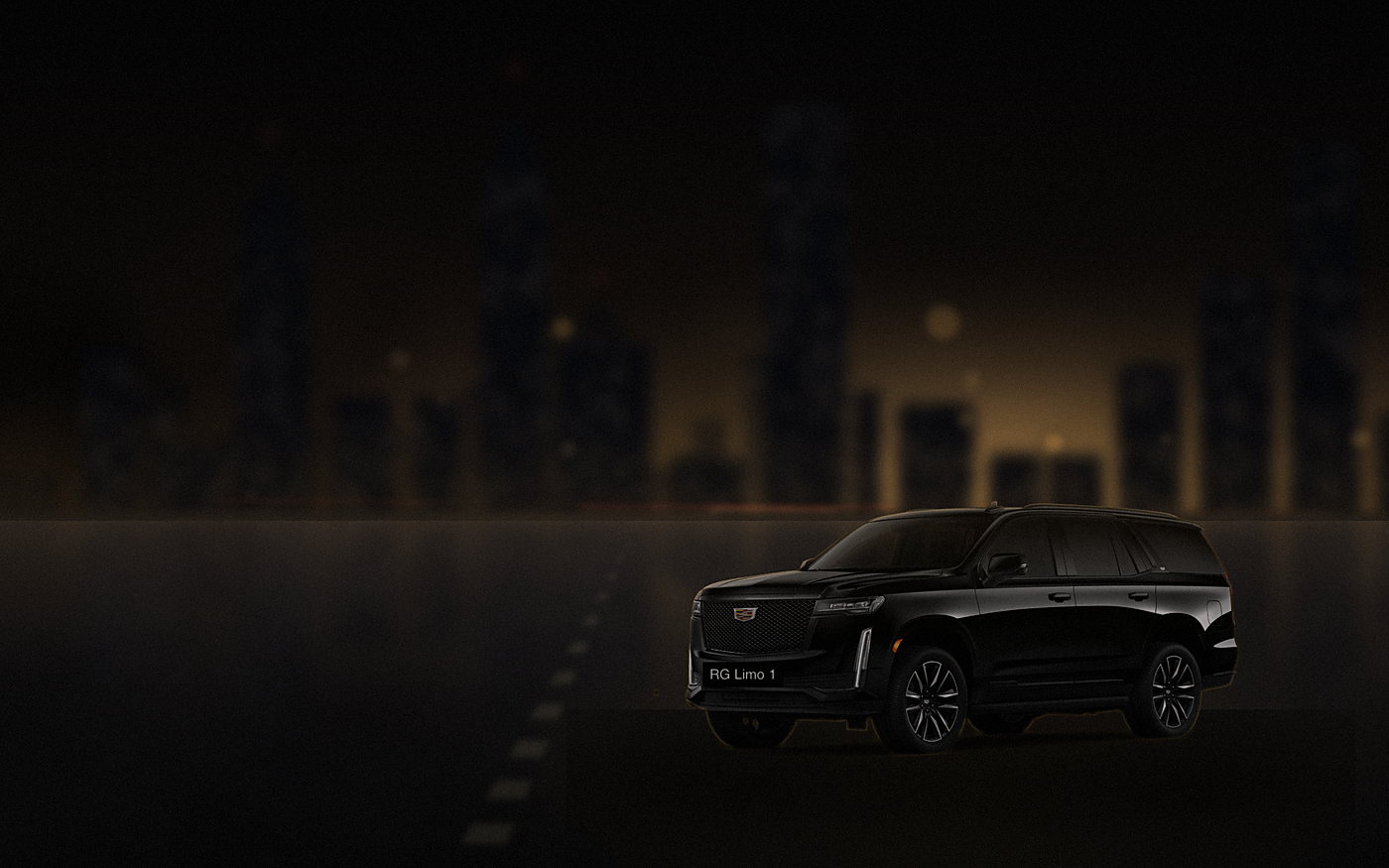
Black Cadillac Escalade at a downtown Los Angeles kerb in warm evening light
Executive travel, kept quiet and on time

The car on the account

An S-Class, and when it stops being the right answer.

Most executive bookings default to the Mercedes-Benz S-Class, and for one traveller with a case it is hard to improve on.

The reason is the cabin rather than the badge. It is quiet enough at freeway speed to hold a call without the other party hearing the road, the rear bench gives an adult room to sit back rather than perch, and the boot takes two large cases without anybody having to discuss it on the pavement. Three passengers is the working figure.

Beyond three it stops being the right car, and the honest advice is to move up rather than to squeeze. A Cadillac Escalade ESV or a GMC Yukon Denali carries six. A Chevrolet Suburban carries seven and swallows the luggage that comes with a week away. A Mercedes-Benz Sprinter carries fourteen, which is the answer for a team travelling to an offsite together rather than in convoy.

Six classes and ninety-nine vehicles sit behind that choice, which is the practical reason a puncture on the way to your kerb is an inconvenience for us rather than a cancelled meeting for you. If a substitution has to happen, the desk tells you what is coming before it arrives.

Capacities, luggage figures and photographs for all six classes are on the fleet page. If you are not sure which to put on the account, describe the typical trip to dispatch and let them pick.

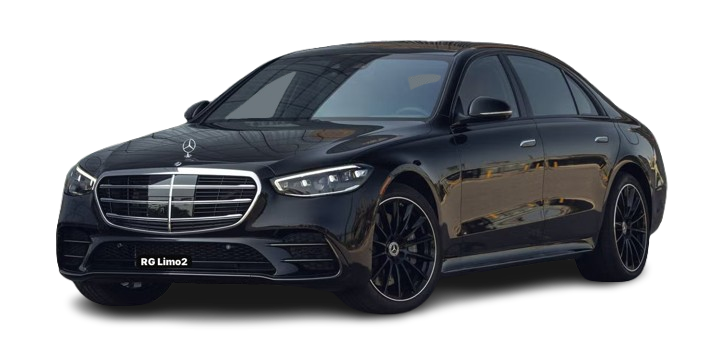
Sedan Black Mercedes-Benz S-Class sedan used for executive car service in Los Angeles

Mercedes-Benz S-Class

The default for one or two executives moving between meetings, and the car most people picture when an office asks for a black sedan. Quiet, unmarked, and small enough to use a kerb a larger vehicle cannot.

3 passengers
Two large cases
All six classes

Four shapes, one fleet

Match the booking to the shape of the day.

Most of the money wasted on corporate ground transport goes on the wrong booking type rather than the wrong company. Here is how the four shapes behave, with no prices attached — those are quoted per job.

Four executive booking shapes compared by the kind of day they suit, how the vehicle behaves and what to know before booking
Booking shapeThe day it suitsHow the car behavesWorth knowing
Single transferOne journey with a clear start and end. Office to airport, hotel to a client's building.Arrives, drives the leg, releases.Cleanest option when the return is uncertain. Book the return separately once it is known.
Hourly holdTwo or three appointments in a morning with gaps you cannot predict.Stays with you between stops, parked nearby rather than sent away.You pay for the waiting because the waiting is the service. Hours can extend on the day if the car is free.
Full dayAn itinerary that starts at a hotel and ends there, with a working lunch somewhere in it.One car, one chauffeur, held from first pickup to last drop.The chauffeur reads the whole itinerary in advance, so nobody navigates from the back seat.
Multi-stopSeveral travellers collected from several addresses and delivered to one.Runs a sequence set by dispatch, in pickup order.Give the desk the addresses the day before — the order it chooses may not be the order you would.

Scroll the table sideways to compare all four columns.

None of these shapes carries a published minimum, deposit or cancellation window on this page. Those are set out on your confirmation for the specific booking, and we would rather write them for your job than publish a figure we might have to vary.

If you are unsure, describe the day to dispatch rather than choosing from the table. A morning that looks like three transfers is often cheaper and calmer as one hourly hold, and a day that looks like a full day is sometimes two transfers with a long gap nobody needs to pay for. The desk has no incentive to talk you into the larger booking, because the company that quotes is the company that drives.

Our chairman does not want conversation before eight in the morning and I had said so once, in an email, months ago. It has not been forgotten since.

Small thing. It is the reason I stopped shopping around on price.

Michael E.Chief of staff, Century City

Where this overlaps a roadshow

A day of investor meetings is a different animal.

Executive work and roadshow work use the same cars and diverge on planning. Once a day has six appointments in it, the transport stops being a series of bookings and becomes a schedule that has to survive being wrong.

The first meeting sets the whole day. If it overruns by twenty minutes, everything after it moves, and the useful question is not whether the car can drive faster but which stop absorbs the loss. That is a dispatch decision, made with the chauffeur on the line rather than by the person in the back seat with a phone and a map.

So the planning happens the day before. Addresses go in sequence, building entrances are identified, and the parts of the day where a car has nowhere legal to wait are flagged early. Below is what changes once a booking has that shape.

Cars in play
Usually one for the group. A second is sometimes worth holding so a principal can leave a meeting early without stranding the rest.
The brief
The chauffeur receives the whole itinerary, not the next leg. He knows stop four before stop one has finished.
Kerb discipline
Cars stand where the group will actually come out, which is often not the address on the invitation. Rear entrances get used a great deal.
Overruns
Rebuilt on the move by the desk. You hear the revised plan rather than being asked to make one.
Between stops
The cabin is treated as working space. Nothing is said to you, the radio stays off, and a call taken in the back is not overheard twice.
The sensitive part
Who you saw and in what order. That sequence stays between the chauffeur, the dispatcher and you, under the same agreement every chauffeur signs before he starts.

Days built this way have their own page: roadshow transportation covers multi-day schedules, advance drives and second vehicles. For a single executive on a normal week, an account here is enough.

Opening the account

Two conversations, then it mostly runs itself.

Setting one up takes a telephone call and an email. There is no form to chase, no onboarding portal and no minimum volume to commit to before we will drive you.

First: who travels, and from where

Names, the addresses that recur, the default class of vehicle for each person, and who in the office is allowed to book. Add the small things while you are at it — which traveller wants conversation, who needs the boot kept clear, which building has a service entrance that works better than the front.

Second: how you want it billed

Whether journeys are gathered onto one invoice or settled individually, which reference or cost centre each traveller sits under, and where the invoice should go. The cycle, the terms and any purchase-order requirement are agreed at that point and written into your confirmation rather than assumed.

Pricing does not change because an account exists. Hourly work starts from $85 and set-price airport runs such as Beverly Hills to LAX start from $125; the exact figure for each job is confirmed in writing before it is accepted. Nothing is metered and demand does not move the number.

You do not need an account to book. Plenty of companies use us for a visiting board member twice a year and never open one, which is fine — ring the desk, take the written quote, and the car arrives. The account only earns its keep once the same details are being typed out for the third time.

Asked by the person doing the booking

What offices ask about executive car service in Los Angeles.

The vehicle and the chauffeur standard are identical. An account adds a named contact at the desk, traveller details held on file so nobody re-types them, and the option to gather journeys onto a single invoice. The invoicing cycle and terms are agreed when the account is opened.

Yes. An assistant can book on a traveller's behalf and the traveller can book directly, and both reach the same dispatcher. You tell us at setup who is authorised to raise bookings, and we hold that list against the account.

A Mercedes-Benz S-Class, unless you set a different default. It seats three. Above that we move to a Cadillac Escalade ESV or GMC Yukon Denali for six, a Chevrolet Suburban for seven, or a Mercedes-Benz Sprinter for fourteen when a team travels together rather than in convoy.

Hourly work starts from $85, and several airport runs are sold as set prices from $125. Each job is quoted in writing before it is accepted. Tolls and venue parking are passed on at what they cost us, and no gratuity is added to a total unless you ask for it.

On an hourly or full-day booking, nothing changes: the car is already reserved for that period and waiting is part of it. On a single transfer, dispatch works out what the extension means and confirms the revised figure with you before the car commits to it.

Yes. LAX and Van Nuys are the two we work most heavily, and an LAX arrival carries thirty minutes of complimentary waiting measured from the moment the aircraft actually lands. We also drive Orange County and San Diego; LAX to San Diego is a set price from $525.

Related pages worth a look: hourly and as-directed work for days without a fixed end, LAX transfers for arrivals and departures, and corporate events when the whole office has to move at once.

08 — Open an account

Send us the travellers and we will hold the details.

One call sets it up. After that a booking takes a sentence, because the desk already knows the addresses, the vehicle and who signs it off.

(323) 799-3190

Or email info@rgblacklimo.com and a dispatcher will come back with the setup questions in one message.